


 中文
中文 English
 Deutsch
 Italiano
 한국어
한국어 にほんご
にほんごQuick Answer
Choosing a thermal protector for transformers requires matching the trip temperature with insulation class, ensuring proper current rating, selecting the correct reset type, and considering installation position and environmental conditions.
Why Selecting the Right Thermal Protector Matters
An incorrectly selected thermal protector can lead to:
· Nuisance tripping
· Delayed protection response
· Transformer overheating
· Reduced lifespan
Proper selection ensures accurate protection, safety, and long-term reliability.
Application of Thermal Protectors in Transformers
Thermal protectors are widely used in:
· Toroidal (ring) transformers
· Large dry-type transformers
· Medical transformers
· Industrial power transformers
When transformers operate under abnormal conditions or high ambient temperatures, overheating may cause insulation failure or fire hazards.
A built-in thermal protector provides real-time temperature cutoff, ensuring system safety.
How a Transformer Thermal Protector Works
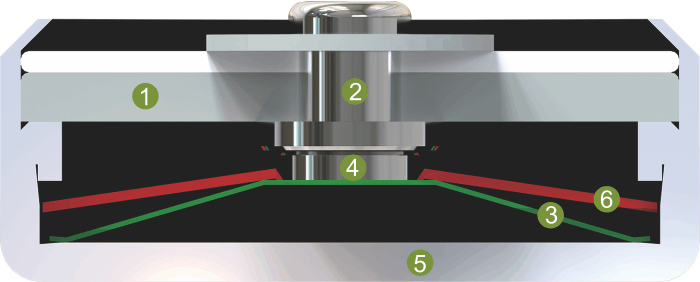
Transformer thermal protectors operate based on the bimetal snap-action principle:
1. Temperature rises due to overload or environment
2. Bimetal disc deforms at preset temperature
3. Contacts open → circuit breaks
4. Power supply is cut off
5. After cooling → automatic reset
This ensures fast and reliable protection without external power.
Key Factors for Selecting a Thermal Protector
1. Trip Temperature (Most Critical)
Insulation Class | Max Temp (°C) | Recommended Trip (°C) |
Class B | 130 | 120–125 |
Class F | 155 | 140–150 |
Class H | 180 | 165–175 |
Too low → frequent trips
Too high → delayed protection
2. Rated Current
· Must exceed normal operating current
· Must consider inrush current
Incorrect current rating is one of the most common design failures.
3. Reset Type
Automatic Reset
· Most common in transformers
· Enables continuous operation
Manual Reset
· Used in high-risk systems
4. Installation Method
· Embedded in winding → fastest response (recommended)
· Surface-mounted → easier but slower
5. Environmental Conditions
· High temperature
· Humidity
· Vibration
· Vacuum varnish process
Devices must resist varnish infiltration and mechanical stress.
Current-Sensitive vs Temperature-Sensitive Designs
Current-Sensitive Design
· Compact
· Cost-effective
· Affected by inrush current
Pure Temperature Sensing Design
· More stable
· More accurate
· Longer lifespan
Recommended for high-end transformer applications.

Recommended Thermal Protector Selection (SAFTTY Solutions)
Based on typical transformer applications:
ST01 Series (Embedded Protection – Compact Design) · Suitable for coil embedding · Rated current: up to 6.3A · Fast response · Ideal for small and medium transformers
|
|
| ST06 Series (Higher Current Applications) · Rated current: up to 10A · Stronger load capacity · Suitable for larger transformers |

Typical Selection Guidelines
· Temperature: 130°C / 150°C / 155°C / 180°C
· Insulation class: mostly Class F or H
· Installation: embedded in winding preferred
Installation Recommendations
· Embed protector directly in transformer winding
· Connect in main circuit for direct cutoff
· Or integrate into control circuit for signal shutdown
Embedded installation ensures accurate temperature sensing and fastest response.
Common Selection Mistakes
· Ignoring insulation class
· Not considering inrush current
· Wrong installation position
· Using low-quality components
Recommended Selection Process
1. Define transformer type
2. Identify insulation class
3. Determine operating current
4. Choose installation method
5. Select trip temperature
6. Validate with testing
Learn More About Transformer Protection
For a full protection system overview, read:
Transformer Thermal Protection: Methods, Working Principle & Selection Guide
Get Expert Thermal Protector Solutions
Choosing the right thermal protector requires both thermal engineering knowledge and application experience.
We provide:
· Customized trip temperature solutions
· Transformer-specific design support
· Sample testing and validation
· OEM / ODM services
Contact us today to get the right thermal protector for your transformer application.


