


 中文
 English
 Deutsch
 Italiano
 한국어
 にほんご
After three months of construction and preparation, SAFTTY has successfully relocated its ceramic capacitive pressure sensor production line to its facility in Baoying, Jiangsu Province, China. The production line is now housed in a Class 100,000 cleanroom, providing an upgraded manufacturing environment for pressure sensor production.
This relocation marks an important step in SAFTTY's manufacturing development. By upgrading its production environment and integrating key manufacturing and testing processes, SAFTTY aims to improve production efficiency, strengthen quality control, and better meet the growing demand for pressure sensors across industrial and liquid cooling applications.


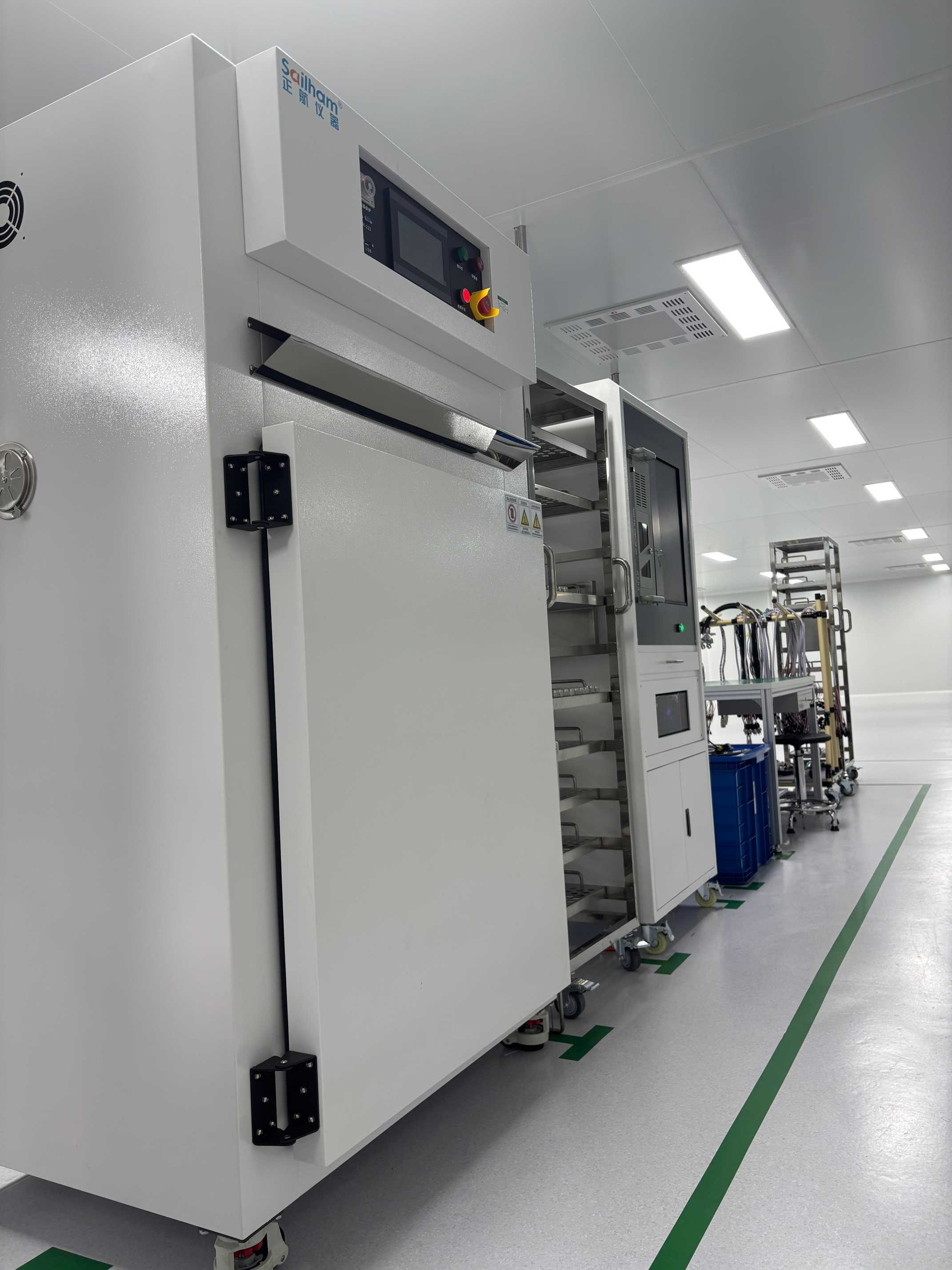
Expanded Pressure Sensor Manufacturing Capabilities
The relocated production line integrates multiple manufacturing, assembly, and testing processes to support the production of ceramic capacitive pressure sensors.
Key production processes include:
FPCB soldering to ceramic capacitive sensor elements
FPCB soldering to electrical connectors
Component assembly and housing riveting
RTV silicone sealing
High-temperature stress-relief treatment
Sensor calibration and performance adjustment
Accuracy testing at high, ambient, and low temperatures
Air tightness testing
Voltage and resistance testing
By integrating these processes into a dedicated production line, SAFTTY can better manage manufacturing consistency and product quality at different stages of production.
Ceramic Capacitive Pressure Sensing Technology
SAFTTY adopts ceramic capacitive sensing technology for its pressure sensor products. Unlike thick-film piezoresistive sensors, which measure changes in electrical resistance caused by mechanical strain, capacitive sensors detect pressure through changes in capacitance as the sensing diaphragm moves relative to the electrodes.
This measurement principle offers potential advantages in measurement stability, temperature performance, and long-term reliability, depending on sensor design and operating conditions.
1. Displacement-Based Measurement
Ceramic capacitive sensors detect diaphragm displacement through changes in capacitance. Although the raw capacitance response is nonlinear, signal-conditioning circuits and linearization algorithms can compensate for this behavior.
Because the sensing principle is based on displacement rather than resistance changes caused by material strain, capacitive sensing can reduce certain influences associated with material stress and aging, contributing to measurement stability over time.
2. Differential Capacitive Structure for Temperature Compensation
The ceramic capacitive sensing element adopts a differential structure in which two capacitances respond in opposite directions to pressure changes. Temperature-related effects shared by both capacitors can be reduced through differential measurement.
This structure helps improve temperature stability, while appropriate signal conditioning and calibration further optimize measurement performance.
3. Sealed Vacuum Reference Cavity
For sensor configurations using a sealed vacuum reference cavity, the cavity provides a reference pressure for absolute pressure measurement.
A properly sealed reference cavity helps maintain measurement consistency over time. Long-term stability also depends on sealing integrity, material properties, manufacturing quality, and operating conditions.
Key Product Characteristics
Depending on the specific sensor model and configuration, SAFTTY's ceramic capacitive pressure sensors offer the following characteristics:
Measurement accuracy of ±0.5% FS or better
Long-term stability, with certain models achieving annual drift below 0.1% FS
Advantages in low-pressure measurement applications, particularly for ranges below 1 MPa
Compatibility with media such as water, ethylene glycol, and mineral oil, subject to product configuration and operating conditions
Integrated self-diagnostic functions for applications requiring enhanced system monitoring
These characteristics make ceramic capacitive pressure sensors suitable for applications where measurement stability, media compatibility, and long-term performance are important.
Materials, Quality Control, and Reliability Testing
SAFTTY incorporates carefully selected materials and structural designs to support reliable pressure sensor operation in demanding environments.
Key design features include:
304 stainless steel housings
Imported EPDM sealing materials
Water-resistant surface treatment of the ceramic capacitive sensing element
These design features support compatibility with media such as water, ethylene glycol, and mineral oil, depending on the specific product configuration and operating conditions.
To evaluate product reliability under different environmental conditions, SAFTTY conducts a series of tests, including:
High-temperature and low-temperature testing
High- and low-temperature shock testing
Temperature cycling tests
Salt spray testing
Vibration testing
Combined with calibration, accuracy verification, and air tightness testing during production, these procedures help maintain consistent product performance and reliability.
Supporting Customer Requirements with Improved Manufacturing Efficiency
SAFTTY's pressure sensors are designed for applications in energy storage systems, ultra-fast EV charging stations, data centers, medical equipment, and power systems, particularly in liquid cooling and thermal management applications.
The relocation of the production line to Baoying, Jiangsu, brings manufacturing operations closer to target customers and upstream suppliers. This can help improve delivery and logistics efficiency while providing greater flexibility for customized sensor models based on specific customer requirements.
With an upgraded production environment, integrated manufacturing processes, and ceramic capacitive sensing technology, SAFTTY continues to strengthen its pressure sensor manufacturing capabilities and support the evolving requirements of industrial customers worldwide.


